
Kefir, yogurt, dahi and lassi are all made from fermented milk, so it is easy to think they are the same thing. They are not. Kefir is a thin, tangy, lightly fizzy drink made with kefir grains. Yogurt and dahi are thick, spoonable milk set with bacteria, and dahi is simply the South Asian name for home-set yogurt. Lassi is not a separate ferment at all: it is a drink made by blending dahi with water or milk. This guide explains the difference between kefir and yogurt, kefir and dahi, and kefir and lassi, and helps you choose the right one for you in Pakistan.
Kefir vs yogurt vs dahi vs lassi: comparison table
| Feature | Kefir | Yogurt and dahi | Lassi |
|---|---|---|---|
| What it is | Milk fermented by kefir grains | Milk fermented by a yogurt starter and set | A drink made by blending dahi |
| Texture | Thin and drinkable | Thick and spoonable | Thin and smooth |
| Taste | Tangy, a little sour, slightly fizzy | Mild to tangy | Sweet (meethi) or salty (namkeen) |
| How it is made | Room temperature, about 12 to 24 hours | Kept warm for several hours until it sets | Blended in minutes from dahi |
| Microbes | A wide mix of bacteria and yeasts | A smaller, specific mix of bacteria | Whatever the dahi contains, diluted |
| Lactose | Partly used up by the grains | Partly used up by the bacteria | Similar to dahi, plus any added milk |
| Reusable culture | The grains, indefinitely | A spoon of the last batch | The dahi you start from |
| Best used for | Daily probiotic drink, smoothies, dressings | Raita, cooking, eating with meals | A cooling drink, especially in summer |
What is kefir?
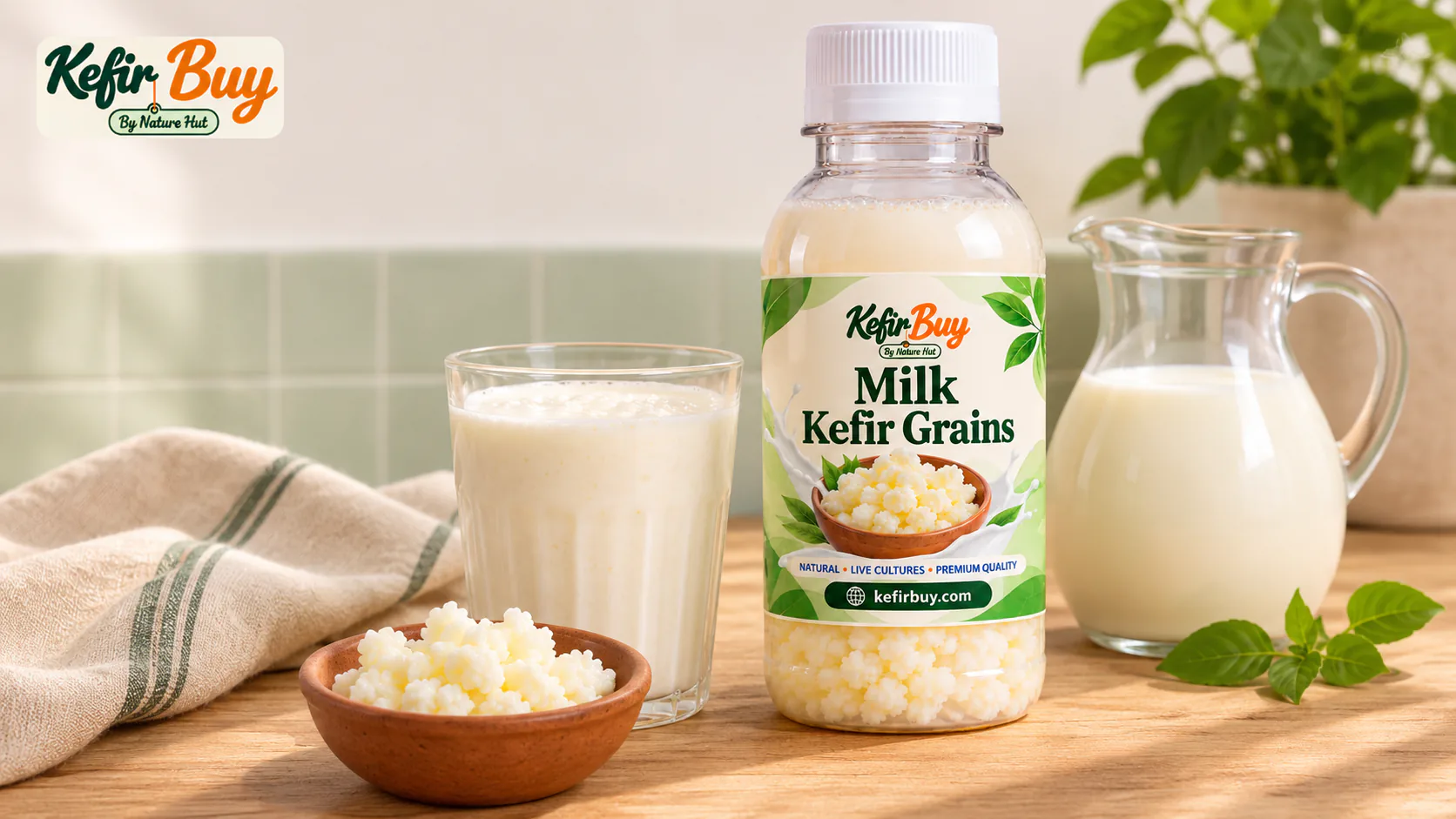
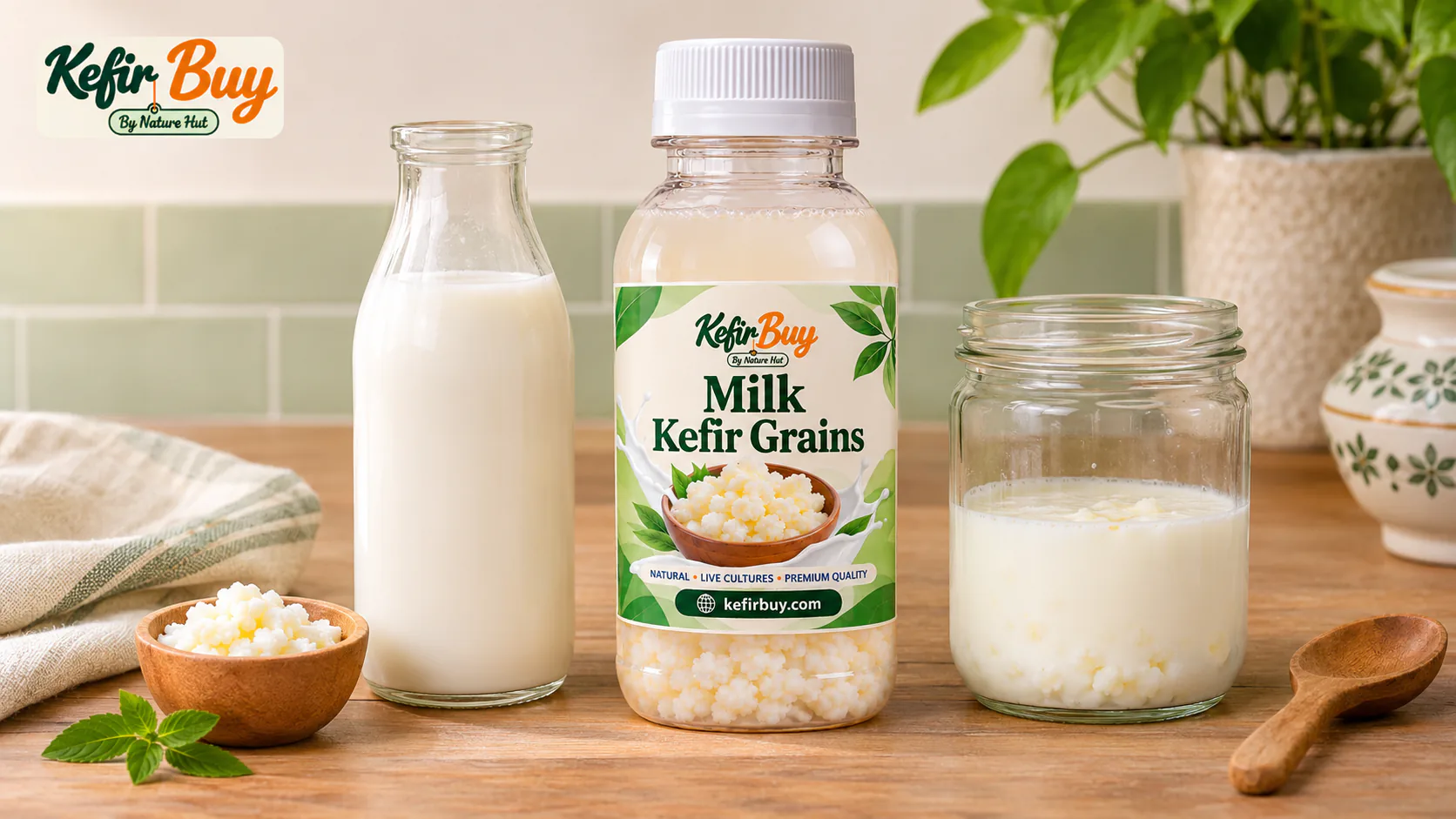
Kefir is a fermented milk drink that started in the Caucasus mountains. It is made by adding kefir grains to milk and leaving it at room temperature for about a day. The grains are not cereal grains: they are small, soft, cauliflower-like clusters of bacteria and yeasts held together in a jelly they make themselves. When the kefir is ready, you strain out the grains and put them into fresh milk, so one set of grains can keep making kefir for years. Read the full guide: What is kefir?
What is yogurt, and what is dahi?
Yogurt is milk fermented by lactic acid bacteria, most often Streptococcus thermophilus and Lactobacillus bulgaricus. The bacteria turn the milk sugar (lactose) into lactic acid, which thickens the milk and gives it a mild sour taste. Yogurt needs warmth, so it is usually kept in a warm place for several hours until it sets.
Dahi is the yogurt made in almost every Pakistani and Indian home. It is set by stirring a spoon of yesterday’s dahi into warm milk and leaving it overnight. Because each family’s starter has been passed on for years, dahi bacteria vary from home to home, while factory yogurt uses a fixed culture.
Is dahi the same as yogurt?
In practice, yes. Dahi is yogurt by another name. The small differences come from the starter (a home culture versus a lab culture) and the milk: dahi in Pakistan is often made with full-fat buffalo milk, which gives a thicker, creamier set. Greek yogurt is yogurt that has been strained to remove whey, which makes it much thicker and higher in protein. See What is Greek yogurt?
What is lassi?
Lassi is a traditional Punjabi drink made by blending dahi with water or milk. Meethi lassi is sweetened with sugar, and namkeen lassi is made with salt and often roasted zeera (cumin). Chaas, or thin buttermilk, is a lighter, more watery version. Lassi has no culture of its own: its bacteria come from the dahi it is made from, diluted by the water or milk you add.
Kefir vs yogurt: the key differences
- Microbes: kefir grains contain many kinds of lactic acid bacteria, acetic acid bacteria and yeasts. Yogurt usually contains a few kinds of bacteria and no yeasts.
- Texture: kefir is pourable, like thin buttermilk. Yogurt is thick enough to eat with a spoon.
- Taste: the yeasts give kefir a slight fizz and a sharper tang. Yogurt is milder.
- Temperature: kefir ferments at normal room temperature. Yogurt needs warmth to set.
- Culture: kefir grains grow and can be reused forever. Yogurt starter weakens over time and is eventually replaced.
Kefir vs dahi: which is better for gut health?
Both kefir and dahi are fermented foods that contain live bacteria, and both can be part of a healthy diet. The main difference is variety: kefir usually contains a wider range of bacteria and yeasts than dahi or yogurt. That is the main reason people choose kefir as a daily probiotic drink. Dahi is still an excellent everyday food, especially for cooking and with meals. For what the studies actually show, read Kefir benefits: what the research says. If you have a health condition, talk to your doctor before making big changes to your diet.
Are kefir and lassi the same?
No. You drink both from a glass, which is why people often confuse them. Lassi starts from dahi and is blended with water, sugar or salt. Kefir is fermented directly from milk by its own grains, has a sharper, tangier taste and is slightly fizzy. You can, however, make a kefir lassi: blend kefir with a little water and add sugar or salt and zeera, just as you would with dahi.
Is kefir yogurt a real thing?
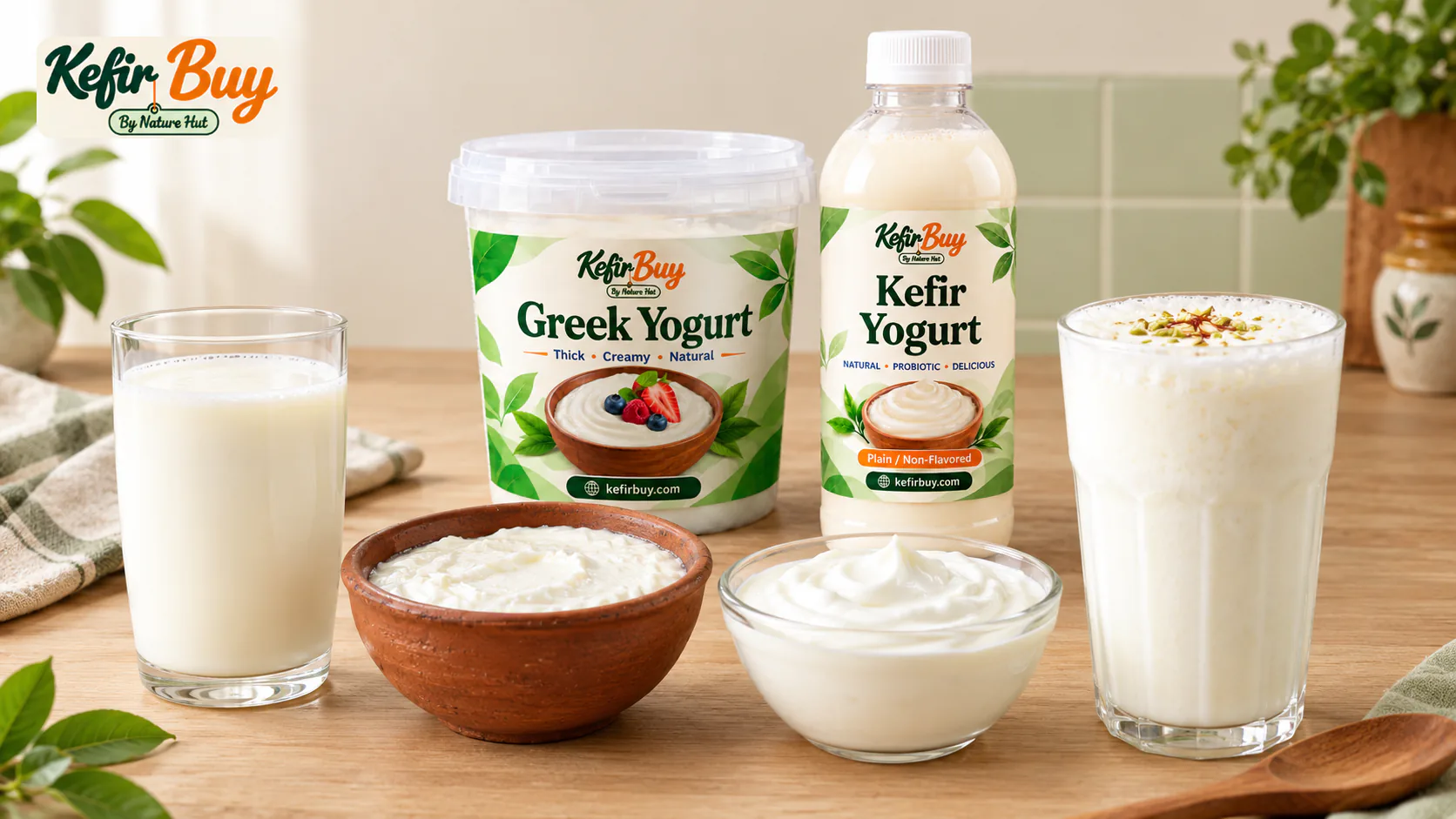
Yes. Kefir yogurt is yogurt cultured with kefir. It is thicker than kefir drink but thinner and tangier than set yogurt, so it gives you the wider kefir culture in a spoonable form. Try Kefir Yogurt, Flavored Kefir Yogurt and Greek Yogurt, delivered in Peshawar.
Which should I choose?
There is no single winner. It depends on how you want to use it:
- Choose kefir if you want a tangy daily probiotic drink with the widest mix of microbes, and you would like to brew your own at home.
- Choose dahi or yogurt for raita, cooking, marinating and eating with your meals.
- Choose lassi when you want a cooling, filling drink on a hot day.
- Choose kefir yogurt if you want kefir’s culture but prefer to eat it with a spoon.
Use kefir anywhere you would use thin buttermilk or lassi, for example in smoothies, salad dressings and namkeen drinks.
How to make kefir at home in Pakistan
Making kefir is easier than setting dahi, because it does not need warmth. Put a tablespoon of kefir grains in a clean glass jar, add about a cup of milk, cover with a cloth and leave it at room temperature for 12 to 24 hours. Strain, drink the kefir, and put the grains into fresh milk. Pakistan’s summer heat speeds this up, so read Fermenting in Pakistan’s heat and Which milk for kefir in Pakistan? before you start. The full step-by-step guide is here: How to make milk kefir at home (kefir kaise banaye). The easiest way to begin is with a Kefir Starter Kit.
Frequently asked questions
What is the difference between kefir and yogurt?
Kefir is a thin, tangy, slightly fizzy drink made by fermenting milk with kefir grains, which hold a wide mix of bacteria and yeasts. Yogurt is thicker and spoonable, and is made with a smaller set of bacteria (usually Streptococcus thermophilus and Lactobacillus bulgaricus) kept warm until the milk sets.
Is dahi the same as yogurt?
Mostly, yes. Dahi is the South Asian name for home-set yogurt. The main difference is the starter: dahi is usually set with a spoon of yesterday’s dahi, so its bacteria vary from home to home, while commercial yogurt uses a fixed, standard culture.
Are kefir and lassi the same thing?
No. Lassi is a drink made by blending dahi with water or milk, plus sugar or salt. Kefir is its own ferment, made from milk with kefir grains. Both are drunk from a glass, but kefir is tangier, a little fizzy and has a much wider mix of microbes.
Which is better for the stomach, kefir or dahi?
Both are fermented and both contain live bacteria. Kefir usually contains more types of bacteria and yeasts than dahi or yogurt, which is why many people choose it for gut health. If you have a medical condition, ask your doctor before making big changes to your diet.
Can I drink kefir if I am lactose intolerant?
Many people with lactose intolerance find kefir easier to digest than plain milk, because the grains use up part of the lactose during fermentation. In a 2003 study, kefir improved lactose digestion in adults with lactose maldigestion. Start with a small glass and see how you feel.
Does kefir contain alcohol?
Kefir contains a very small amount of alcohol produced by its yeasts, usually well under 1% when it is fermented for about a day. Longer or warmer fermentation can raise this slightly. Dahi, yogurt and lassi contain essentially none.
Can I make lassi with kefir?
Yes. Blend kefir with a little water or milk and add sugar, salt, roasted zeera or fruit, just as you would for lassi. It will be thinner and tangier than regular lassi.
Kefir aur dahi mein kya farq hai?
Kefir ek patla, khatta aur halka sa fizzy drink hai jo kefir grains se doodh ferment kar ke banta hai. Dahi gaadha hota hai aur purane dahi ke chammach se jamaya jata hai. Lassi alag ferment nahi, balki dahi aur paani ya doodh mila kar banti hai.
Try kefir for yourself
The best way to understand the difference between kefir, yogurt, dahi and lassi is to taste them side by side. Get live kefir grains or a ready kefir yogurt from the KefirBuy shop, and see our Learn to Brew guides for more.
Sources: Cultures for Health, Introduction to milk kefir, opened 9 October 2026. Bourrie BCT, Willing BP, Cotter PD, The microbiota and health promoting characteristics of the fermented beverage kefir, Frontiers in Microbiology, 2016. Hertzler SR, Clancy SM, Kefir improves lactose digestion and tolerance in adults with lactose maldigestion, Journal of the American Dietetic Association, 2003. Written by KefirBuy.